
Beyond the Front Door: What Our Partners Tour Revealed About Housing, Infrastructure, and the Future of Durham
November 17, 2026
Building communities, confronting infrastructure challenges, and redefining what affordable homeownership requires.
By Nimasheena Burns
President & CEO, Habitat for Humanity of Durham
At Habitat for Humanity of Durham, we often say that we do more than build houses. We build opportunities, strengthen neighborhoods, and create pathways to lasting economic stability. Recently, we had the opportunity to demonstrate exactly what that means.
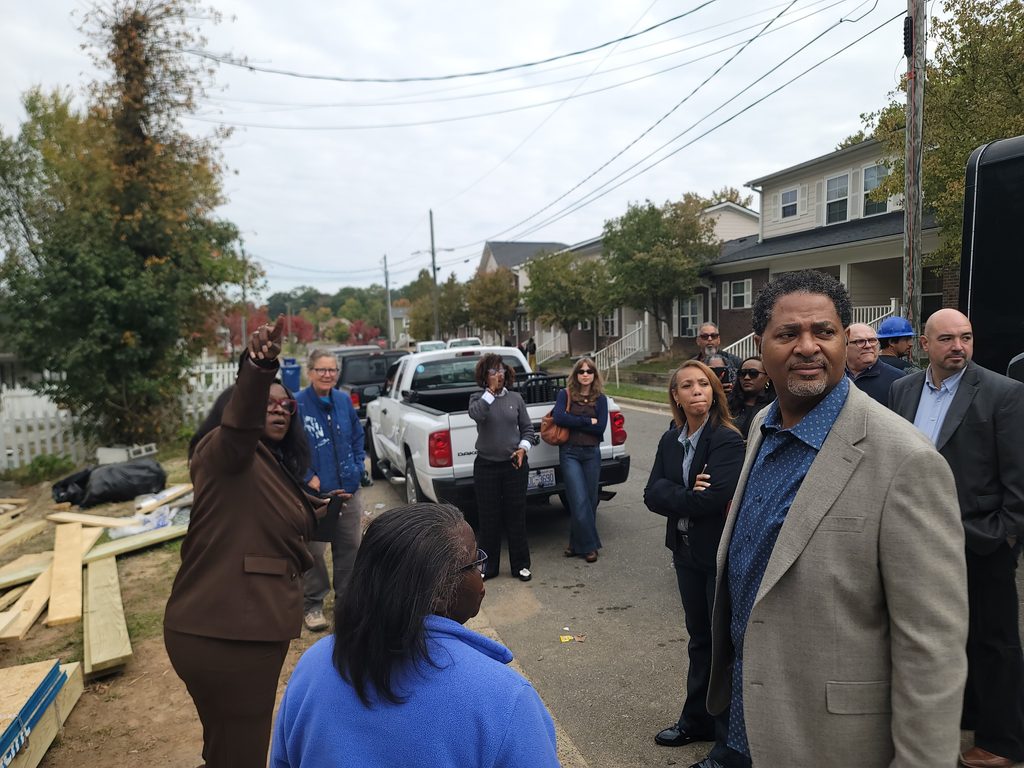
As part of our 40th anniversary celebration, we welcomed elected officials, members of the clergy, representatives from higher education institutions, public administrators, donors, volunteers, and community partners for a tour of several of our housing developments and recently donated properties. (If you missed it, we will be hosting another tour in December). Our objective was intentional. We wanted our partners to see the work beyond the photographs, fundraising appeals, and construction announcements. We wanted them to understand not only what we build, but why we build it, where we build it, and the complex decisions that determine whether a home is genuinely affordable for the families we serve.
The tour was an opportunity to celebrate progress, acknowledge challenges, and engage in meaningful conversations about the future of affordable homeownership in Durham.
And what a tour it was.
Mount Vernon: A Completed Community and a Model for Downtown Development
One of our proudest stops was Mount Vernon, a newly completed 10-home community in downtown Durham. Mount Vernon represents an important milestone for our affiliate. The community incorporates a diverse collection of housing types, including two-, three-, four-, and five-bedroom homes, as well as attached housing. Families are already beginning to close on these homes and take the next steps toward homeownership. What makes Mount Vernon particularly significant is what it demonstrates about land use and housing design. In a growing city where available land is increasingly scarce and expensive, we must challenge the assumption that residential development requires a single housing type. Mount Vernon demonstrates that a relatively small urban footprint can accommodate different household sizes, architectural configurations, and family needs without sacrificing the character or purpose of the community.
Density and diversity are not competing objectives. When thoughtfully designed, they can strengthen one another.
For our visiting partners, Mount Vernon offered tangible evidence that affordable housing can be attractive, adaptable, and compatible with the changing landscape of downtown Durham.
It is also a reminder that housing production is about more than the number of units built. It is about creating neighborhoods in which families can establish roots, accumulate equity, and participate fully in the economic life of their community.
Returning to Our Roots in Southeast Durham
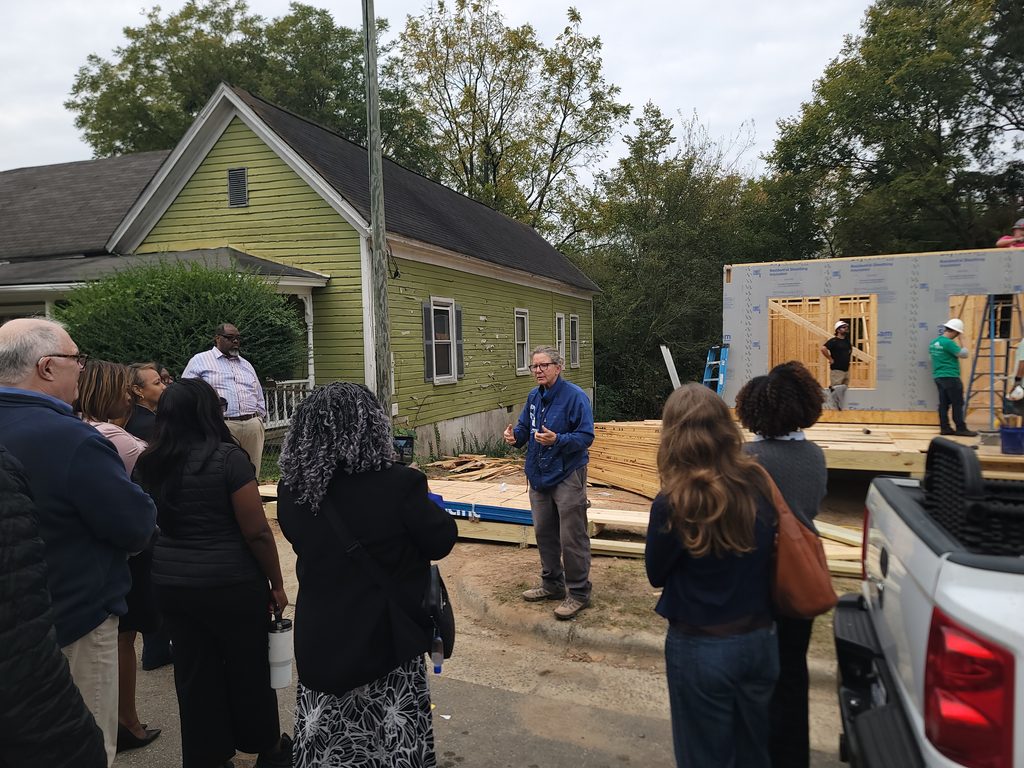
Our next stops were equally meaningful, but for different reasons. We traveled into southeast Durham, an area deeply connected to the history of Habitat for Humanity of Durham. Our affiliate’s first home was built on Angier Avenue in 1987. Over the decades, we have helped establish homeownership opportunities throughout communities that include Plum Street, Morning Glory, Hyde, and Blacknall. More than 100 Habitat homes are part of our long-standing investment in this broader area of Durham. Returning to southeast Durham is not simply a construction decision. It is a reaffirmation of our commitment to communities that have helped define our organization’s history. We are fortunate to have begun new housing efforts on Main and Goley Streets. During the tour, guests visited our Goley Standard, a housing model that demonstrates something important: not every Habitat home is a two-story house or a townhome.
While attached housing and townhome communities have become increasingly popular, we must be careful not to mistake a housing trend for a universal housing solution. Single-story homes remain critically important. For families with mobility limitations, older adults, individuals with disabilities, and households requiring additional accommodations, a single-story home may offer a safer, more practical, and more sustainable living environment. Housing accessibility must remain central to our understanding of affordability. A home is not truly appropriate for a family simply because its purchase price falls within an acceptable range. It must also support the family’s ability to live safely, independently, and comfortably over time. This commitment to diverse housing types is especially important as we navigate the challenges associated with our planned homes in the Goose Creek Preserve area.
When Infrastructure Becomes a Barrier to Affordable Housing
One of the more serious conversations during our tour concerned the ongoing wastewater capacity limitations affecting portions of east and southeast Durham. The City of Durham has identified significant sewer-capacity constraints within the Goose Creek basin. As a result, some proposed developments that would increase wastewater flow face restrictions on new sewer connections and cannot proceed without additional review, an approved alternative, or infrastructure improvements.
The City’s current improvement schedule extends through 2029 for the first phase and 2030 for the second. In practical terms, that means some projects cannot add new sewer service for years unless another solution is approved. Put more plainly, for certain new homes, it can mean no new toilets until the necessary infrastructure is available. I recognize that the City must protect public health, prevent sanitary sewer overflows, and comply with environmental regulations. These responsibilities are essential. I also recognize that the current City Council did not create these circumstances overnight. It would be neither accurate nor fair to assign decades of infrastructure challenges to the individuals currently serving in office.
Nevertheless, the consequences of infrastructure investment failing to keep pace with community needs are now being felt by builders both large and small. For organizations like Habitat for Humanity of Durham, the implications are particularly difficult. We are not building speculative housing. We are building homes for families who have already demonstrated their readiness and commitment to affordable homeownership. Our affiliate has multiple permits and planned family homes within the affected development pipeline. Yet certain projects cannot move forward without additional approvals or project-specific solutions. We are now working to identify those solutions, including pursuing special approvals for homes within the affected area or seeking opportunities to secure permits and construct homes elsewhere. Both approaches come with consequences. They require additional staff time, engineering coordination, administrative work, and financial resources. In some cases, they also require us to revisit construction schedules and reconsider where families may ultimately purchase their homes. For an organization that works diligently to keep construction costs low, those additional expenses matter. But our greatest concern is not simply the cost.
Our greatest concern is the families who are waiting. Many of the communities we have historically served in southeast Durham offer comparatively manageable property taxes and opportunities for long-term neighborhood stability. These characteristics are increasingly difficult to find in a rapidly appreciating housing market. When development is delayed or shifted elsewhere, the consequences extend beyond construction timelines. They affect the very geography of affordability. We must ask ourselves an important public policy question: What happens when a city has land, families have qualified for affordable homeownership, and nonprofit builders have the capacity and commitment to construct homes, but infrastructure limitations prevent those opportunities from becoming reality? This is not exclusively a construction issue. It is a question of housing equity, infrastructure planning, and long-term public investment. We remain committed to working collaboratively with City staff and elected leadership to identify responsible solutions.
In the meantime, I ask our community to keep Habitat Durham and our partner families in your thoughts, hearts, and meditations as we navigate this challenging building pause.
The Reality of Donated Homes: Generosity Must Meet Affordability
Another important component of our Partners Tour involved visiting recently donated homes. More on those homes soon. We regularly receive generous inquiries from individuals interested in donating houses, land, or other properties to Habitat Durham. We are deeply grateful for that generosity. However, we also wanted our partners to understand a fundamental reality: Not every donated home or property is appropriate for our homeownership program.
That distinction is not a rejection of generosity. It is an expression of our responsibility to the families we serve and the donors who trust us with their resources. At Habitat for Humanity of Durham, we sell our homes. We do not give them away. Our families purchase their homes through an affordable homeownership model designed to promote financial stability and long-term success.
Our practice is to sell homes below their appraised value, with a standard of at least $1,000 below appraisal. We also do not price homes above what they cost us to produce.
Depending on size and design, our homes generally cost approximately $175,000 to $240,000 to construct, from two-bedroom homes to larger five-bedroom models. Those same properties may appraise between approximately $245,000 and $315,000. That difference represents meaningful value for the families who purchase them. But the sales price is only part of the affordability equation. Our partner families generally earn between 50% and 80% of Durham’s Area Median Income (AMI). For these households, sustainable homeownership depends on the total monthly and annual cost of maintaining a property.
Consider a home that carries a $425,000 sales price, a $200 monthly homeowners association fee, a $7,000 annual property tax bill, and high utility expenses because it is not energy-efficient. Even if someone generously offered that property to Habitat, those ongoing expenses could place homeownership beyond the financial reach of our partner families. That is why we look beyond the assessed value or perceived attractiveness of a donated property. We evaluate taxes, homeowners association obligations, energy efficiency, structural integrity, location, rehabilitation costs, and the property’s ability to meet our program requirements. Our goal is not simply to help a family purchase a home. It is to help that family remain in the home. A property that is affordable on closing day but financially unsustainable five years later does not fulfill our mission.
Responsible Stewardship Sometimes Requires Difficult Decisions
Property donations can present other challenges. Some lots have substantial grading issues, sinkholes, steep drop-offs, or site conditions that make construction disproportionately expensive.
Some houses contain lead, asbestos, significant structural deficiencies, or extensive deterioration requiring tens of thousands of dollars in rehabilitation. Although we have accepted difficult properties in the past, I believe strongly that responsible nonprofit leadership requires evaluating not only whether we can accept a donation, but whether we should.
Our donors invest in Habitat because they want to help families achieve affordable homeownership. Every dollar spent addressing a preventable or disproportionately expensive property problem is a dollar that cannot be invested elsewhere in our mission. Under my leadership, we are committed to thoughtful financial stewardship, responsible decision-making, and the long-term sustainability of our work. That does not mean we will never accept a challenging property.
In fact, we have recently been successful in securing additional financial contributions alongside certain donated lots to help prepare those properties for construction. That is an excellent example of how generosity and responsible planning can work together. However, we must be willing to recognize when a property simply does not fit our model. Sometimes the answer is yes. Sometimes the answer is no. And sometimes the answer is yes, provided we can identify the additional resources necessary to make the property viable. Each decision must reflect what is best for the donating party, our organization, our supporters, and, most importantly, our partner families.
Fortunately, we recently received a series of donated homes that align exceptionally well with our program. The financial requirements fit our affordability model. The properties have no homeowners association fees, their tax obligations are manageable, and they offer meaningful opportunities for our families. We are excited about what these properties represent.
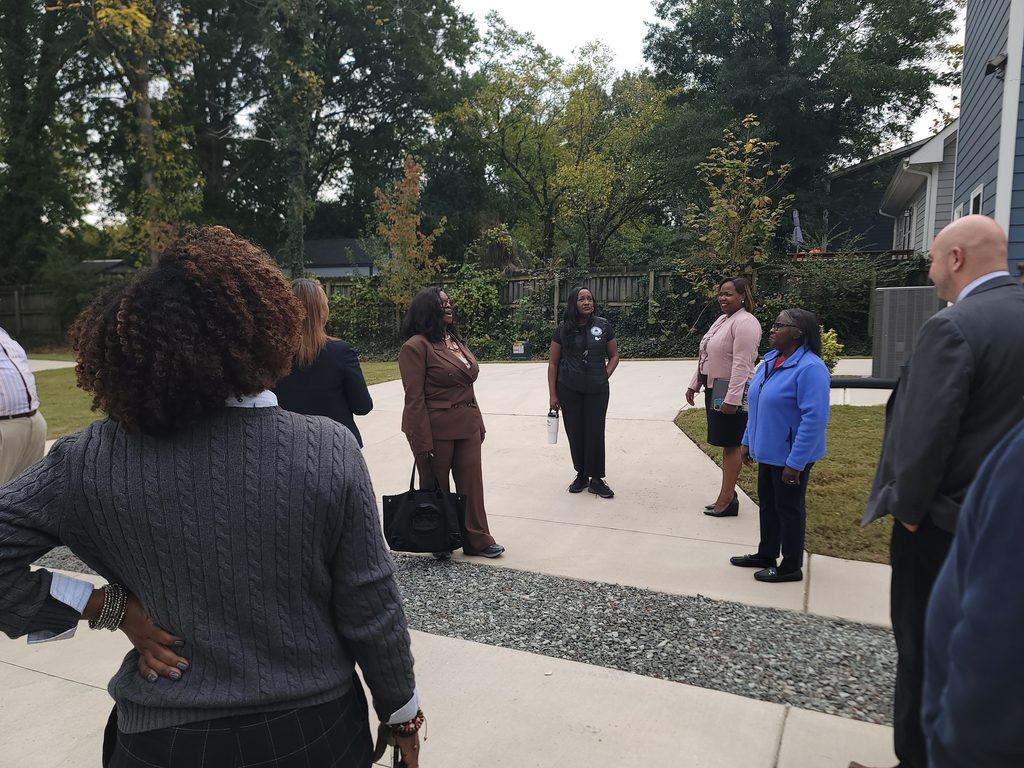
Once our staff and partner families have completed the necessary preparations and are moving toward closing, we look forward to sharing more about these homes and the generosity that made them possible.
The Value of Seeing the Work Firsthand
Our Partners Tour was about far more than visiting construction sites and completed homes.
It was an opportunity to help elected officials, members of the clergy, university leaders, public administrators, volunteers, donors, and other community stakeholders understand the complexity of creating sustainable affordable homeownership opportunities. We discussed development costs, infrastructure limitations, land-use decisions, housing accessibility, responsible property donations, and the financial realities facing moderate- and lower-income households. We answered questions, exchanged ideas, and strengthened relationships. We also gained new supporters, volunteers, and donors who left with a deeper understanding of both our accomplishments and our challenges.
That matters. Too often, conversations about affordable housing focus exclusively on how many homes can be built or how quickly units can be delivered. Those are important measurements, but they are incomplete. The real measure of success must also include whether homes are accessible, whether communities are sustainable, whether families can manage their ongoing costs, and whether public infrastructure and local policy support long-term residential stability.
Affordable housing is not just a matter of construction. It is the intersection of land use, infrastructure, public policy, household economics, and community investment. Every one of those elements must work together.
Forty Years of Building. A Future Still Taking Shape.
As Habitat for Humanity of Durham celebrates 40 years of service and moves closer to the historic closing of our 500th home, we are proud of the communities we have built and the families who have entrusted us with their homeownership journeys. Mount Vernon shows what thoughtful development can accomplish in downtown Durham. The Goley Standard reinforces the importance of diverse and accessible housing options. Our work in southeast Durham reminds us that we have a responsibility to remain committed to the communities where our story began, even when infrastructure challenges make that commitment more difficult.
And our recently donated properties demonstrate how generosity, thoughtful evaluation, and responsible stewardship can create opportunities that endure beyond the day a family receives its keys. Our tour guests saw completed neighborhoods, new opportunities, public policy challenges, and the tangible impact of community investment.
Most importantly, they saw why our work must continue. We look forward to hosting another Partners Tour soon and inviting even more community members to experience this work firsthand.
Because when people understand the full story of affordable homeownership, they become better advocates, stronger partners, and more informed investors in Durham’s future.
At Habitat for Humanity of Durham, we remain committed to doing this work thoughtfully, compassionately, and responsibly. We are not simply building for today.
We are building for the families, neighborhoods, and generations that will call Durham home tomorrow.
In Durham, All Roads Lead Home.
Built for What’s Next.